genre(2026)
A clear guide to genre, its impact on storytelling, and practical steps to identify and explore your own preferred genres.
In storytelling, genre is the umbrella that covers the style, tone, and conventions of a work. It helps readers, viewers, and listeners know what to expect and guides creators in making choices about plot, character, pacing, and theme. Genre isn’t a rigid box. It’s a navigational map that can point you toward certain moods, risks, and rewards. Understanding genre gives you clearer lenses for both consuming and producing content.
Quick-reference overview of core concepts
| Concept | What it is | Why it matters | How to spot it |
|---|---|---|---|
| Genre | A category of storytelling with shared conventions | Guides reader expectations and author choices | Look for recurring tropes, tone, and target audience |
| Core genre vs subgenre | Primary category vs specialized niche | Helps focus writing/editing scope | Identify dominant vibe; note secondary elements |
| Reader vs creator perspective | How a genre is experienced by readers vs how it’s crafted | Aligns expectations with goals | Reader wants mood; creator wants structure |
Compiled November 2026; check the provider's site for current details.
What is genre, really?
Genre is a category that groups works by shared elements. These elements can be:
- Setting (historical, futuristic, contemporary, fantastical)
- Mood (horror, whimsy, melancholy, wonder)
- Form (romance, mystery, thriller, sci-fi, fantasy, nonfiction)
- Theme (justice, survival, coming-of-age, transformation)
- Narrative cues (a quest, a whodunit, a heist, a love triangle)
Genres often blend, so you may find works labeled as science fantasy, romantic suspense, or historical thriller. The labels help you quickly gauge what kind of experience to expect, but the best stories often come from artists who cross boundaries with intention.
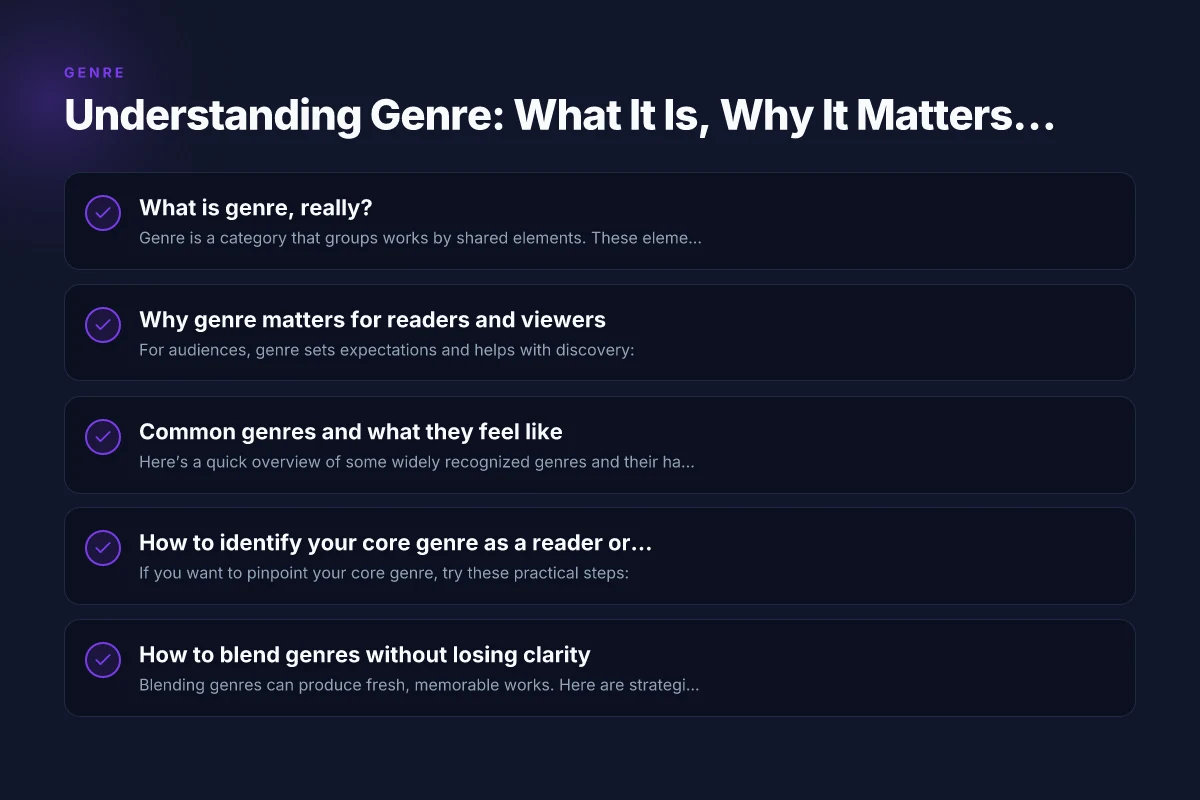
Why genre matters for readers and viewers
For audiences, genre sets expectations and helps with discovery:
- Filtering: You can avoid disappointment by skipping works that don’t align with your tastes.
- Community: Shared genre awareness creates quick connections with others who enjoy the same kinds of stories.
- Investment: Knowing the genre helps you anticipate pacing, stakes, and emotional payoffs.
For creators, genre provides a toolkit: editing(2026)
- Conventions: Common tropes and structures you can lean on or subvert.
- Rhythm: Typical pacing and narrative arcs associated with the genre.
- Audience alignment: Marketing and positioning become more precise when the target genre is clear.
However, too rigid adherence can dull originality. Many beloved works blend conventions to feel fresh while still satisfying genre expectations. The best creators know when to honor tradition and when to innovate.
Decision guide for choosing a genre for a new project
| Question | Answer cues | Practical action | Conflicts to resolve | Outcome example |
|---|---|---|---|---|
| What mood do I want? | Suspenseful, hopeful, eerie | Pick a genre with that tone | Mood vs message balance | Mystery-thriller with a hopeful twist |
| What level of realism? | Realistic vs fantastical | Choose grounded vs speculative | Worldbuilding scope | Contemporary drama or fantasy epic |
| Target audience? | Adults, teens, family | Match age and interests | Accessibility vs complexity | YA romance or adult noir |
| Core conflict type? | Mystery, romance, quest, transformation | Align with genre conventions | Subgenre saturation | Procedural suspense or coming-of-age |
| Editing focus? | Pacing, rhythm, clarity | Set editing priorities | Overlap with other genres | Tight thriller or lyrical literary piece |
Compiled November 2026; check the provider's site for current details.
Common genres and what they feel like
Here’s a quick overview of some widely recognized genres and their hallmark traits. Think of this as a starting map, not a rulebook. book cover(2026)
Mystery
Core question: Who did it?
Typical elements: clues, red herrings, a detective, a puzzle to solve
Tone: cerebral, suspenseful book writing(2026)
Pacing: deliberate, with reveal moments
Thriller
Core question: Will the hero survive or succeed?
Typical elements: high stakes, chase scenes, ticking clocks marketing(2026)
Tone: intense, urgent
Pacing: fast, relentless
Fantasy
Core question: What magical or otherworldly problem is at play? pricing(2026)
Typical elements: magic systems, mythical creatures, quest structures
Tone: wondrous, epic or dark
Pacing: varies from sprawling to tightly focused
Science Fiction publishing(2026)
Core question: How does technology or future society shape humanity?
Typical elements: speculative tech, space or altered realities, social critique
Tone: exploratory, sometimes cautionary
Pacing: can be meticulous or action-driven
Romance
Core question: Will the couple find lasting connection?
Typical elements: emotional arc, chemistry, obstacles to love
Tone: hopeful, intimate
Pacing: steady, with emotional milestones
Historical
Core question: How did people live in a past era?
Typical elements: period detail, authentic language, social norms of the time
Tone: reflective, immersive
Pacing: varies. Can be character-driven or plot-driven
Horror
Core question: What unsettles or threatens the protagonist?
Typical elements: fear, the unknown, monsters or psychological tension
Tone: eerie, unsettling
Pacing: can be slow-building or sudden jolts
Realism / Literary
Core question: What does it mean to be human in everyday life?
Typical elements: nuanced character study, everyday settings
Tone: observant, intimate
Pacing: steady, contemplative
Nonfiction / Memoir
Core question: What happened, and why does it matter?
Typical elements: personal narrative, factual grounding, reflection
Tone: authoritative, intimate
Pacing: variable. Often structured around events or themes
How to identify your core genre as a reader or creator
If you want to pinpoint your core genre, try these practical steps:
- Track your reactions: Note the books or films you finish with a sense of completion, and what kept you engaged.
- List your favorite moments: Are they suspenseful reveals, romantic confessions, awe-inspiring worlds, or character-driven moral questions?
- Examine your comfort zone: Do you lean toward fast-paced thrills, cozy character studies, or thought-provoking social critiques?
- Look for overlap: Do you often enjoy stories that mix romance with mystery, or fantasy with coming-of-age themes?
- Read genre-defining works: Reading a few canonical titles in a range of genres can sharpen your sense of what you crave.
How to blend genres without losing clarity (at a glance)
| Blend idea | Typical feel | Safe integration tip | Signal for reader | Edit-check example |
|---|---|---|---|---|
| Mystery + romance | Suspense with emotional arc | Tie romance to investigative stakes | Clear motive for both threads | Ensure clues drive both threads |
| Sci-fi + fantasy | Otherworld tech + magical elements | Define one anchor technology or magic rule | Consistent rule-set | Revisit worldbuilding doc in edits |
| Historical + thriller | Realistic period with danger | Ground fiction in authentic details | Accurate period voice | Fact-check dates and customs |
| Literary + genre elements | Focus on character + genre pace | Let theme guide plot beats | Distinct voice, genre cues | Readerly questions during edits |
Compiled November 2026; check the provider's site for current details.
How to blend genres without losing clarity
Blending genres can produce fresh, memorable works. Here are strategies to do it without confusing readers or viewers:
- Anchor your core: Pick a primary genre you want to satisfy (e.g., mystery) and layer secondary elements (e.g., romance or fantasy) around it.
- Use clear signals: Establish tone, setting, or character expectations early so audiences know what kind of ride they’re on.
- Control pacing with the blend: If adding humor to a thriller, let tempo cues (short chapters, cliffhangers) keep suspense intact.
- Respect genre conventions while innovating: Subvert a trope with a purposeful twist rather than ignoring it entirely.
A simple comparison: choosing a genre for a new project
Here is a quick table to help you compare common pathways when planning a new story or project. The goal is to pick a core genre and see how other elements align.
| Core genre | Typical tone | Common tropes | Suggested audience | Potential crossovers | | Mystery | cerebral, suspenseful | clues, detective, twist ending | mystery lovers, puzzle fans | Cozy mystery, noir thriller, sci-fi mystery | | Fantasy | adventurous, mythic | quest, magic system, mythical beings | fans of world-building and epic stakes | urban fantasy, dark fantasy, science fantasy | | Romance | warm, emotionally driven | love interest, obstacles, happy ending | readers seeking emotional connection | romantic comedy, romantic suspense, fantasy romance | | Science Fiction | exploratory, speculative | future tech, alternate realities | tech-curious readers, thinkers | hard sci-fi, space opera, cli-fi | | Horror | eerie, visceral | fear, the uncanny, monster or threat | adrenaline seekers, fans of dread | gothic horror, psychological thriller, supernatural |
This table isn’t exhaustive, but it helps you map your core direction and potential blends. When you’re planning a project, decide whether you want to lead with mood, with puzzle, with romance, or with world-building. Then invite secondary flavors as seasoning.
How genre influences writing and editing process
- Outline with genre in mind: Start with a skeleton that fits the genre’s expectations (arc, pacing beats, character types).
- Develop genre-specific strengths: If you’re writing a thriller, build tension through stakes and pacing. If you’re writing literary realism, deepen internal conflicts.
- Read with a genre lens: Editing for a thriller focuses on cliffhangers, momentum, and breathless chapters. Editing a literary novel concentrates on voice, rhythm, and character psychology.
- Be consistent, then surprise: Genre conventions are guides. A well-placed twist or subversion can feel fresh without breaking the reader’s trust.
The final recommendation: find your genre passport and explore with intention
- Start with your core: Identify the primary genre that most closely matches your interests and the emotional experience you want to deliver.
- Be aware of the audience: Consider who you’re writing or creating for and what they expect from that genre.
- Allow growth through crossover: Don’t fear blending genres. Use cross-pollination to keep your work vital and surprising.
- Iterate with feedback: Ground your sense of genre in reader responses, editorial notes, and your own evolving taste.
If you’re just starting out, give yourself permission to experiment. Create short pieces across a few genres to feel the tonal shifts and narrative rhythms. Over time, you’ll see patterns emerge, your own signature blend that feels both true to you and inviting to others. Genre is not a cage. It’s a compass that helps you navigate the vast world of stories with clarity, confidence, and curiosity.